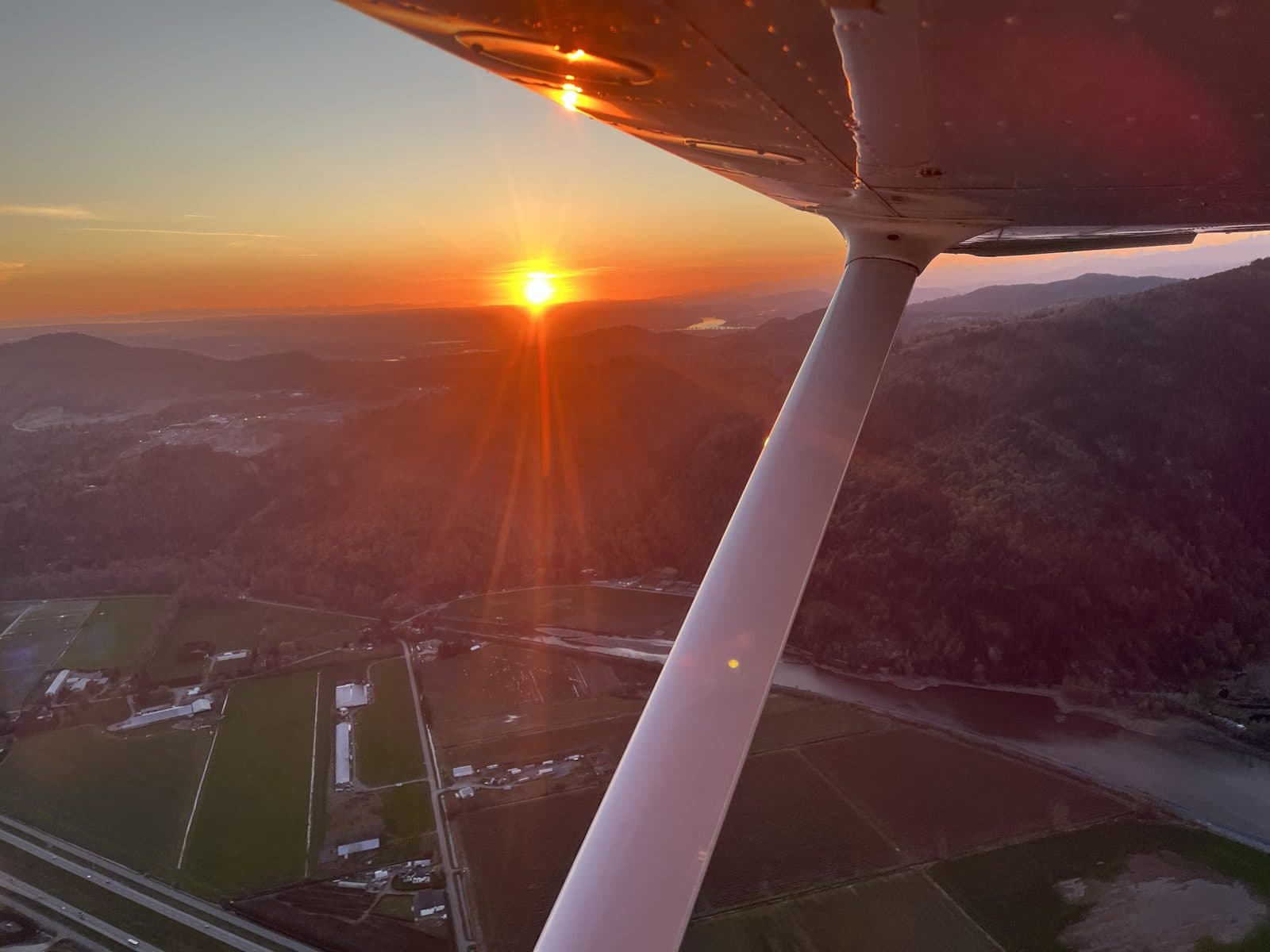
Forty minutes to Victoria, and nobody to ask permission.
Lunch up the coast, home before dark. Your family on the island without the ferry queue.
A Saturday, from Boundary Bay
Straight-line at 110 knots — the cruise of the aeroplane most students learn in.
What you would fly
Counted across all 26 schools.
Four in five are a Cessna 172 or a 152, and most were built in the seventies. Simple, forgiving, and the reason a licence earned here transfers anywhere.
The licence is where it starts
Most things you learn as an adult plateau. Flying keeps opening up — every rating makes the aeroplane useful in a way it was not the week before. Take them in any order, or stop wherever suits you.
And most of it is not ratings at all. A new type, a mountain course, your first trip into a busy control zone. Nobody hands you a certificate for those and they are most of what actually changes.
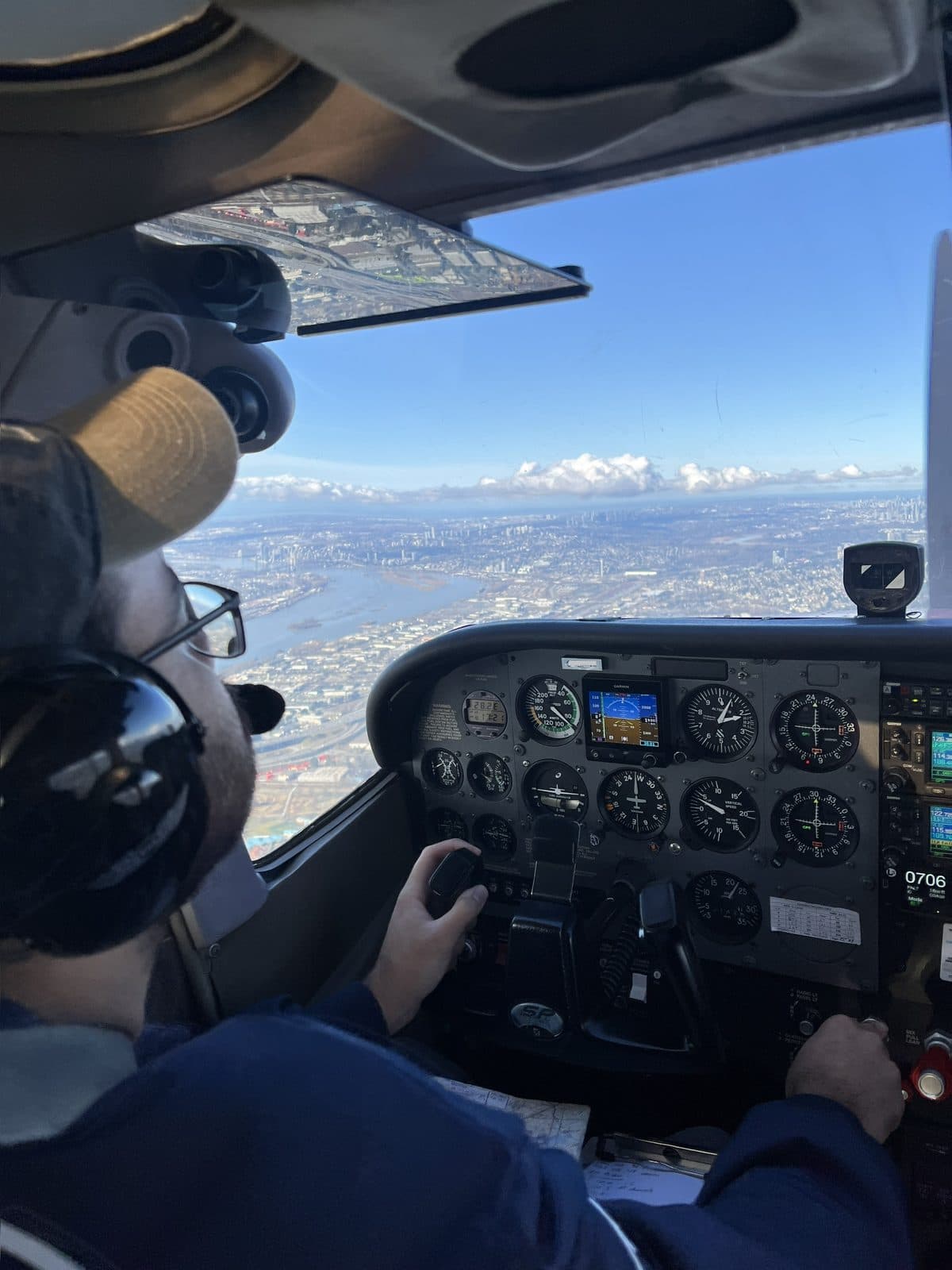
Your own city stops looking familiar
The bridge you sit on every morning is a line. The river you cross without thinking has islands in it. The map you have carried since childhood quietly redraws itself.
What people actually get out of it
- A skill you keep
- Five take-offs and landings every six months to carry passengers. It is a standard you go on meeting rather than a certificate on a wall, and that is why it still feels earned years later.
- A real standard
- Every rung is measured by an examiner against a published standard. When you pass, you know exactly what you can do — which is rarer than it sounds.
- Good company
- Aerodromes are unreasonably friendly places. Bad coffee in a hangar on a Sunday morning, with people you would never otherwise have met.
What it takes
Six months to a year. A couple of evenings a week. A medical booked early, two written exams that are not hard, and a stretch where the landings feel worse before they click.
That is the whole list. People with jobs and children and mortgages do this every year.
What it really costs